

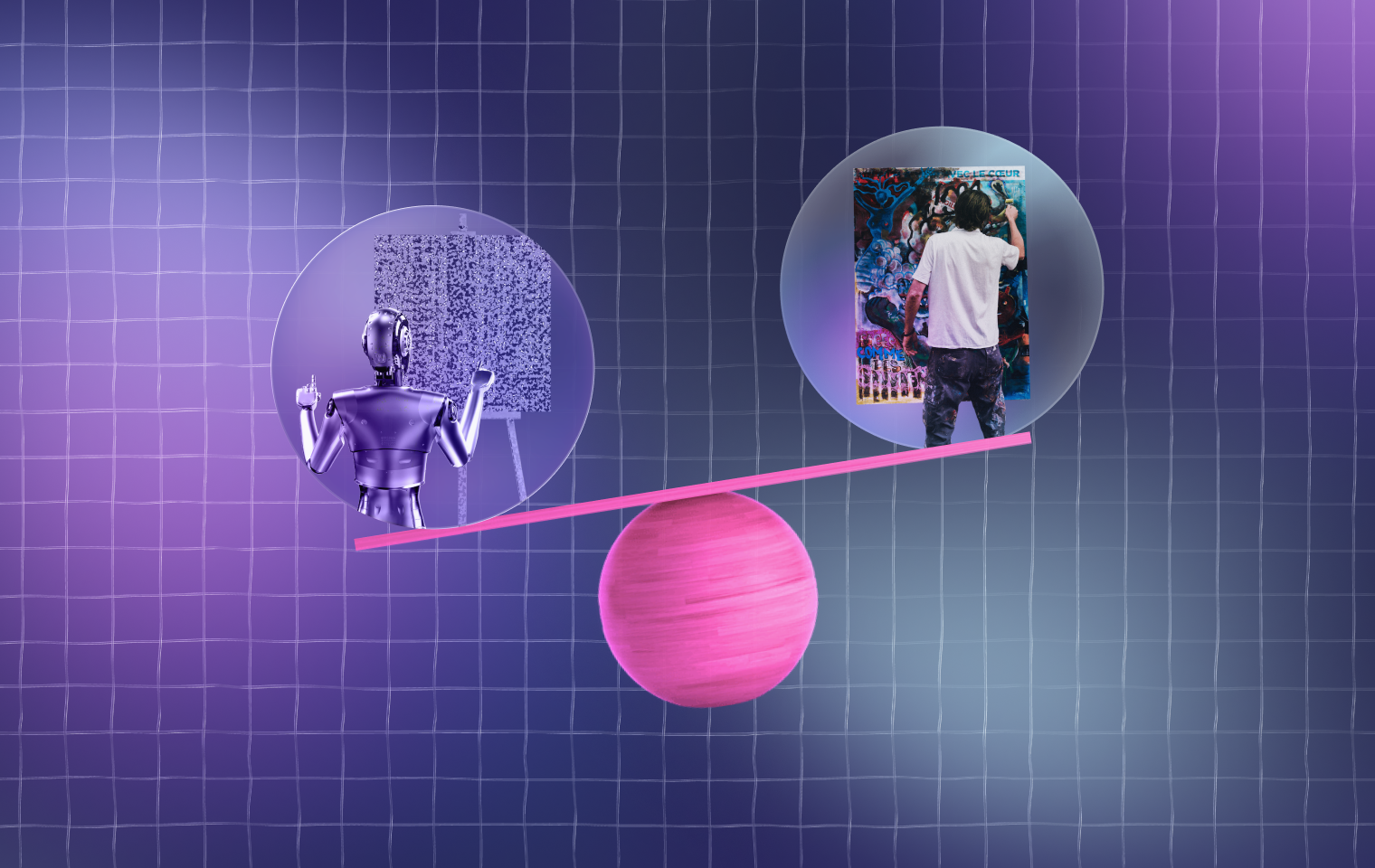
The Downfall of the “Glow”: Why Perfect is Boring
We live in the age of algorithmic perfection.
In just minutes, an AI generator can churn out ten realistic images, write an error-free 500-word essay, and create a perfectly optimized ad campaign. On paper, these tools perform 30% better than anything a human could make – that is, until the audience finds out. In a world saturated with artificial, “perfect” content, authenticity, human effort, and even human error are becoming the new competitive advantage.
AI Advertising: Fast, Measurable and Effective
The shift is already happening. The Interactive Advertising Bureau reports that in 2026, generative AI is expected to power 40% of all advertising. Brands are using AI to churn out high-end video content at record speed and large scale, eliminating the need for a large production team and a large budget.
Currently, 83% of ad executives say their companies have deployed AI in the creative process; a notable recent example is Coca-Cola’s AI-generated holiday ad and Kalshi’s NBA finals ad.
From a purely performance standpoint, AI-generated advertising is no longer inferior to traditional advertising. Recent research found that AI-generated ads perform comparably to human-created ads across key metrics like engagement and conversion rates. Additionally, consumers often can’t always distinguish AI-generated ads from human-made ones, correctly identifying them only about 64% of the time.
On the surface, this suggests a clear future: AI can produce high-quality advertising at scale without sacrificing impact. But that’s only half the story.
The Trust Gap: When Consumers Know It’s AI
New research into the “AI Advertising Paradox” reveals an interesting trend: while AI-generated ads initially grab attention due to their visuals effects, that success is fleeting. According to NYU Stern, while AI can improve click-through rates by up to 19%, those gains vanish the moment a consumer realizes a machine created the content.
Data from Kantar suggests that while AI is excellent at improving upon existing ideas, it struggles to generate the truly original, emotionally resonant creative that builds long-term brand equity. The research highlights that AI-generated content often feels “average” because it is trained on existing, repetitive data. To stand out, brands need the “human spark” – that unpredictable, slightly messy creative leap that a machine wouldn’t think to take.
This isn’t necessarily a rejection of technology; but it’s a sign of a shift in consumer behavior and psychology. People are craving a more raw, unedited ad experience than AI can produce.
Hence the notion that we are entering an era of “AI fatigue.” According to a global study by NielsenIQ (NIQ), nearly half of consumers express varying levels of discomfort with AI-generated advertisements.
Consumers like AI for basic tasks like customer service bots or personalized recommendations, they are highly skeptical of AI when it comes to creative storytelling. When an ad feels too “perfect,” it triggers a defense mechanism. Consumers ask: Is this product real? Does this company actually care, or are they just spitting out a script?
Why “Human Error” Builds Stronger Connections and Trust
Human-made creations are inherently flawed. But why do these flaws resonate? It comes down to three psychological pillars. Content crafted by a real person:
- Increases relatability
- Signals effort and sincerity
- Reduces perceptions of manipulation
When we see a slight imperfection, for example a conversational stutter in a video, a hand-drawn element in a graphic, or a raw, unpolished “behind-the-scenes” moment, our brains register it as “proof of work.” That effort creates a value that an automated process cannot replicate. This “human touch” is a signal of quality that consumers are not willing to give up.
Leaning into Humanity in Advertising
While some brands are heavily leveraging AI to create ad campaigns, scripts, and visuals, some brands are leaning into raw material. Aerie recently launched a campaign with Pamela Anderson, highlighting “real” people and unedited visuals. Business Insider reports that the brand’s leadership argued that AI cannot replicate genuine human warmth and energy, a message that resonated strongly with younger audiences.
Understanding your target audience is crucial to advertising, and understanding this generational divide is important. Unlike Millennials, who may see AI as a productivity win, Gen Z is far more skeptical. They don’t just notice AI; they actively distrust it. If you are using AI to reach this audience, transparency is your friend. Currently, less than half of advertisers disclose AI usage, paving the way for consumer distrust. Practicing radical transparency is essential to preserve long-term brand credibility.
The Future is not AI vs. Humans, but AI with Humans
The goal is not to replace creativity with AI, nor is it to write off machine learning entirely. The “sweet spot” is a hybrid approach.
Let AI generate variations, speed up production, and optimize technical performance. Let humans shape the narrative, tone, and emotional resonance. When advertisers use both to their advantage, they unlock a level of quality that neither could achieve alone.