

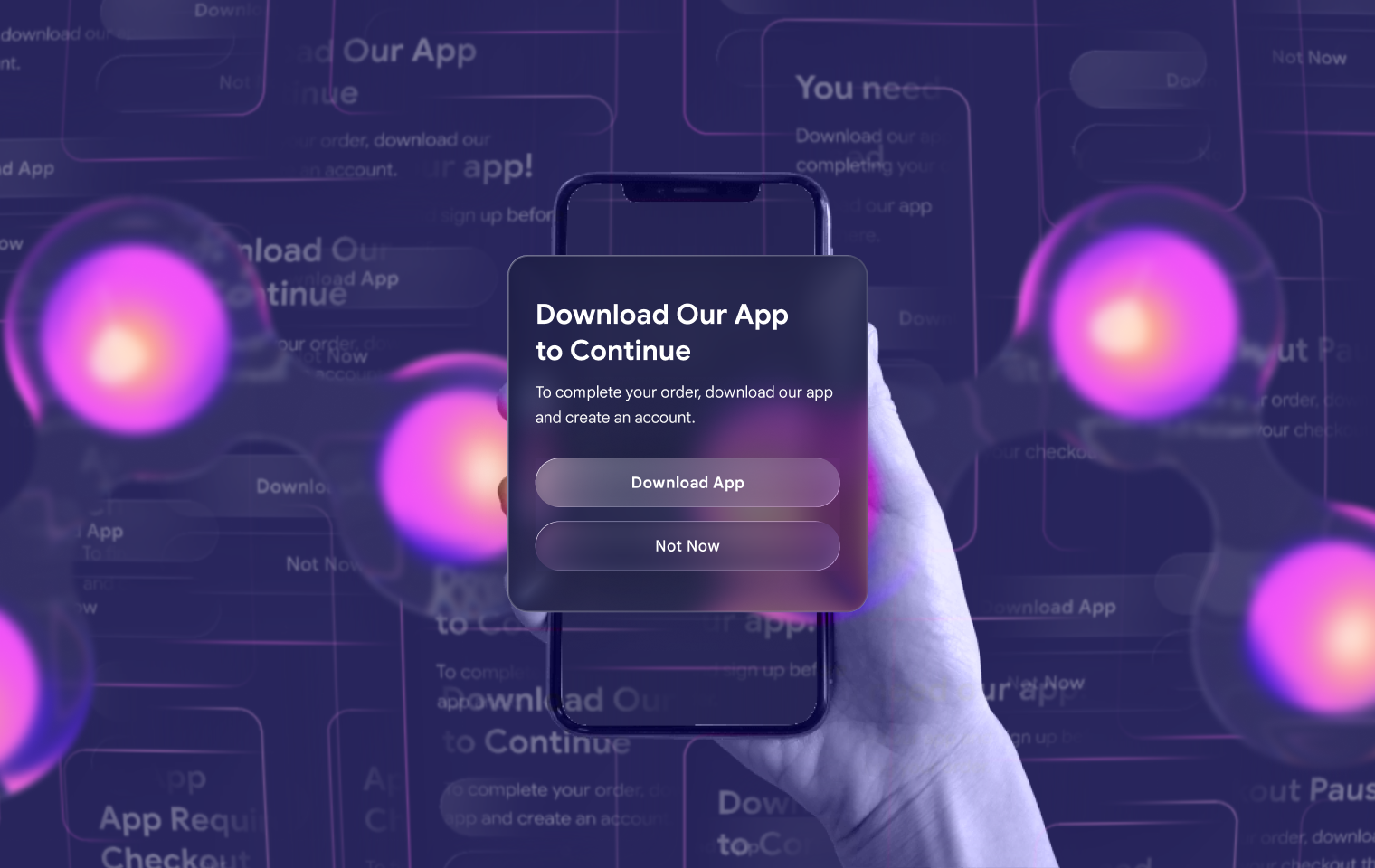
We’ve all been there, the media plan looks good, the creative is great, and your targeting is locked in perfectly. A potential customer sees your ad, they are interested, and they click. But instead of an easy checkout or a clean landing page, they are hit with a digital brick wall, “Download our app to continue”.
Fast forward five minutes. They are resetting their App Store password, staring at a progress bar, and forgetting what they are even buying.
Welcome to the era of app fatigue. Some companies are so busy trying to gather data and earn a place on a consumer’s home screen, they’ve forgotten one of the most important rules for user experience: Make it easy.
The Downfall of “There’s an App for That”
For years, the advertising home run was the app install. An app meant an owned channel, a direct path for push notifications, and behavioral data.
But the landscape has shifted. Consumers are tired of their phones functioning like digital junk drawers overflowing with single use apps. The data backs this up. 52% of app users uninstall applications within 30 days of downloading them. The barrier to entry has become so high that a massive chunk of your audience will simply abandon the transaction rather than go through the trouble of downloading an app they don’t even really want in the first place.
Friction is the Enemy of Performance
As marketers, we need to look at app fatigue as a severe conversion killer.
Every additional step you ask a consumer to take—whether it’s clicking out to the App Store, waiting for a download, creating an account, verifying an email—all adds friction. Currently, mobile shoppers abandon carts at a massive 79% rate, significantly higher than users who are allowed to complete their transaction in browser.
A huge part of this drop off comes from unnecessary digital road blocks. In fact, forced registration and mandatory account creation drive 26% of all cart abandonments. If you are running a campaign for a casual brand, a local event, or a service a customer uses occasionally, driving users to an app install is burning your ad spend. You are asking for commitment when the consumer just wanted a quick coffee.
The First Party Data Dilemma
We know the counterargument. But what about first party data? With cookies and privacy regulations tightening, driving app downloads feels like the safest way to secure owned data and location tracking.
But modern audiences are aware that forced app downloads are just data grabs. To earn their data today, advertisers must rely on a genuine value exchange. You can still capture emails, SMS sign ups, and loyalty data through a seamless mobile website, but you have to offer real value (like an instant discount or a faster checkout) without demanding permanent residence on their phone.
The Mobile Web Advantage
The most frustrating part of this trend is that it is largely unnecessary. In 2026, mobile web browsers are incredibly well optimized.
There is essentially no technical reason why a campaign cannot drive users to a mobile site. By taking advantage of guest checkouts, one click payments like Apple Pay or Google Pay, and web based loyalty portals, you remove the complications between the ad click and the purchase.
Brand loyalty no longer comes from having your logo on a home screen, it comes from respecting their time.
The Takeaway
If your app doesn’t provide recurring utility to the consumer, stop making it the center of your strategy. Shift your focus toward driving mobile web conversions. Respect your audience’s time and save them from frustration and watch your performance naturally climb.