

Imagine spending months fine-tuning an online advertising campaign. You’ve written engaging copy, designed the perfect creative, and dialed in your audience targeting down to the precise interest level. The results roll in: high click-through rates, low cost-per-click, and plenty of incoming traffic.
Then you look at your sales dashboard, and it’s a ghost town.
What went wrong? The ad did its job by winning the click… but the landing page failed to close the deal.
In digital marketing, your ad is merely an invitation. The landing page is the destination. If that destination feels confusing, slow, or disconnected from the promises made in your ad—visitors will bounce before you ever get a chance to convert them.
Here’s why your campaign is only as good as your landing page, along with actionable ways to optimize the Post-Click Experience.
The Power of Message Match
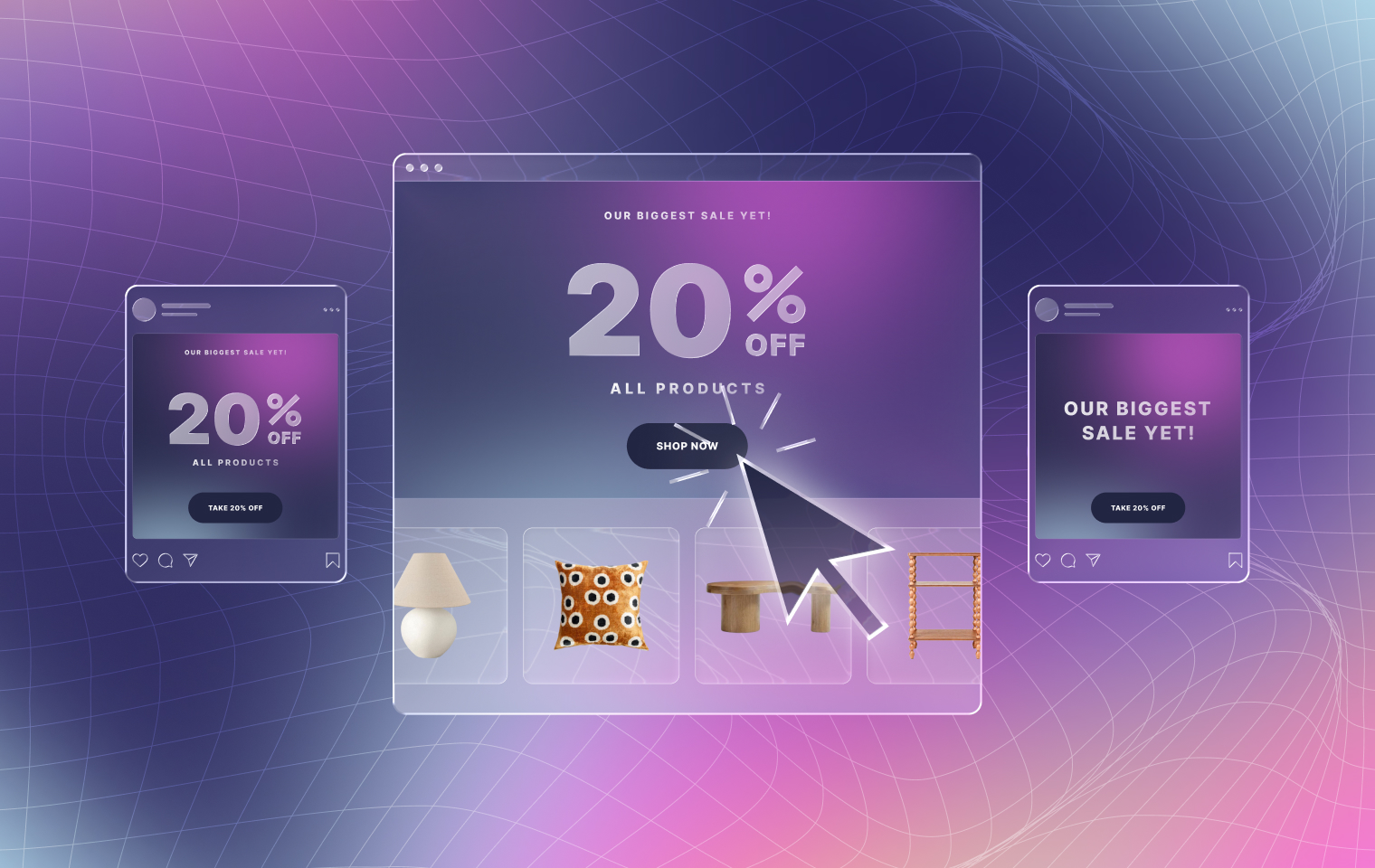
“Message Match” refers to the alignment between your ad’s copy/visuals and the copy/visuals on your landing page.The moment a user clicks your ad, an implicit promise is created.
Example:
If your ad promises “Get 20% Off Ceiling Fans,” clicking that ad should bring the user directly to a page displaying ceiling fans with a prominent 20% discount offer. If it drops them on a generic homepage or a broad catalog page, you introduce cognitive friction. There is a reason the book ‘Don’t Make Me Think,’ published in 2000, is still regarded as one of the best User Experience guides, even today! Humans do not want to be forced to use their brains more than is absolutely necessary.
Brands must ensure their landing page headline mirrors the primary value proposition or hook of the ad creative. Consistent visual branding is a must; matching colors, typography, and imagery all work together to let visitors instantly know they’ve arrived in the right place.
Eliminate Distractions to Maximize Conversions
Your main website’s homepage is designed for exploration. It features navigation menus, “About Us” links, blog feeds, and social media icons. A landing page, however, should have a single, focused objective. When you send paid traffic to a page with dozens of outgoing links, you give visitors dozens of exit ramps. Every alternative link dilutes the likelihood of them taking the specific action you paid for them to take.
It’s important for brands to remove the top navigation bar, footer links, and unnecessary sidebars from dedicated advertising landing pages. Keep the visitor focused entirely on one primary Call-To-Action.
High Quality Scores Lower Your Advertising Costs
A solid landing page doesn’t just improve conversion rates – it actually makes your advertising cheaper!
Major ad networks like Google Ads evaluate your landing page experience to assign a Quality Score. Factors include content relevance, transparent business practices, mobile usability, and load speeds. A higher Quality Score signals to the platform that your page provides a great user experience, resulting in higher ad placements and a lower cost-per-click.
Boosting quality score can be done by incorporating the main keywords from google search ad groups into landing page’s headers, body text, and image ALT tags to boost contextual relevance. Of course, the incorporation of keywords should be natural and not forced!
Mobile Responsiveness and Speed are Non-Negotiable
Over half of all paid ad clicks originate on mobile devices, according to Hubspot. If your page takes longer than three seconds to load or fails to render properly on a smartphone screen, you are effectively throwing your marketing dollars down the drain. Studies show that every second of delay in page load time reduces conversions by up to 7%.
Some things brands should consider to help combat longer load times include:
- Compressing media: Run images through tools like TinyPNG or convert them to WebP format
- Simplify forms: Ask only for essential fields on mobile views
- Test regularly: Use Google PageSpeed Insights to catch scripts or heavy assets dragging down performance.
A successful ad campaign requires a seamless bridge between the pre-click promise and the post-click reality. By treating your landing page not as an afterthought, but as the core engine of your conversion funnel, you protect your ad spend, improve conversion rate, and increase your return.