

The Problem with the Commercial Break
For years, the gold standard of TV advertising was simple: buy a 30 second spot, crank up the volume, and hope the viewer stays on the couch.
In the Connected TV (CTV) era, that strategy is rapidly decaying. The moment a standard ad break starts, viewers look down at their phones, leave the room, or skip the ad entirely. Traditional 60 second CTV spots are yielding diminishing returns as consumer attention becomes harder to hold.
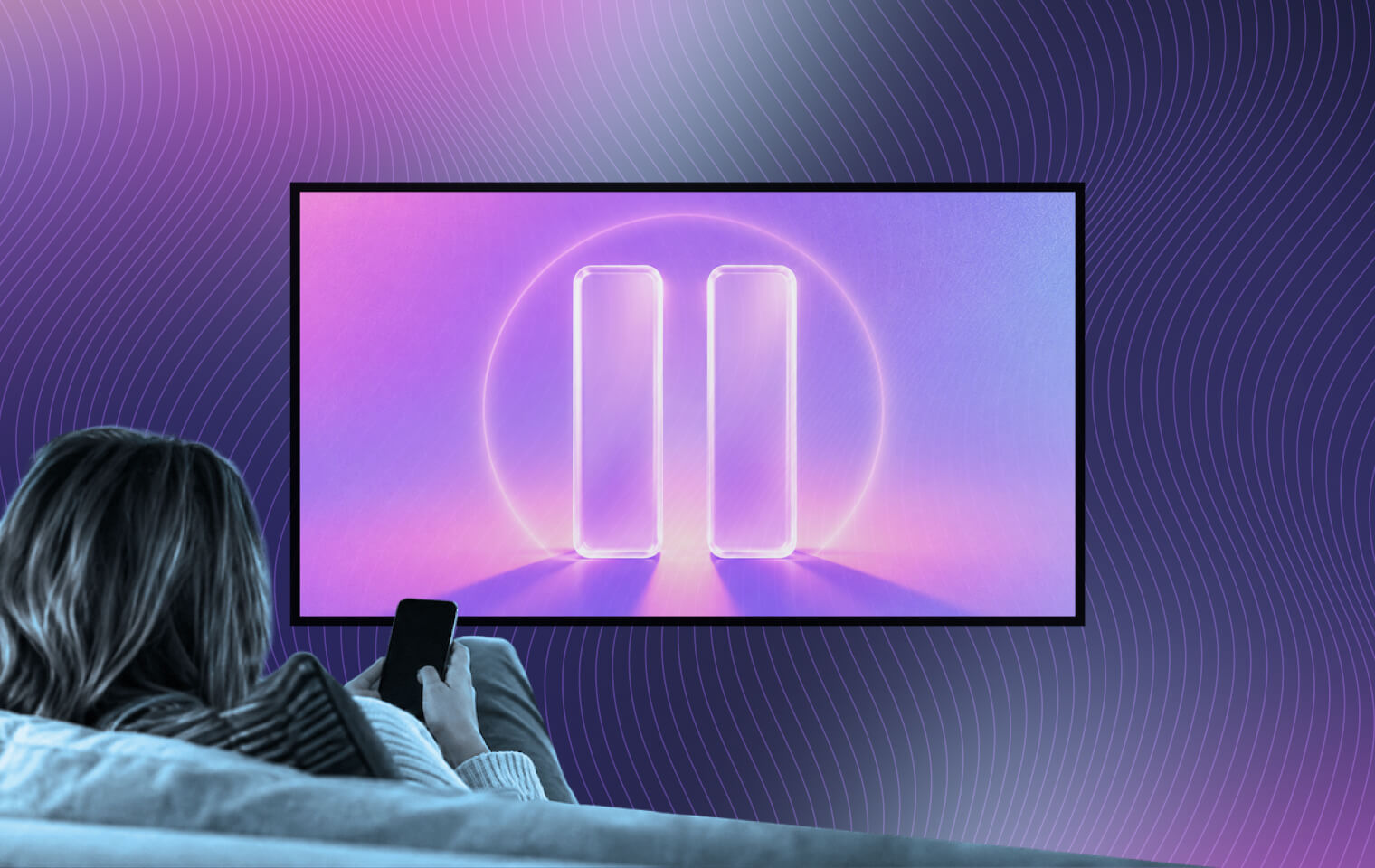
The industry has treated CTV ad breaks as a linear TV replacement, but forcing intrusive video flow onto modern viewers is no longer effective. The most valuable moment on television today is not when the show is playing, it is when the user hits pause.
The Unintrusive High Attention Window
An overwhelming 81% of TV viewers pause content specifically to avoid missing what they are watching. When a user hits pause, they are actively staring at the screen, tuned in, and focused. Rather than interrupting the viewing experience, programmatic pause ads capture consumers in a completely non intrusive, clutter free moment.
Recent data shows this subtle shift fundamentally changes how viewers engage with media. Programmatic pause ads deliver nearly double the attention of traditional 60 second CTV ads, with auto brands seeing a 180.3% lift in attention time. This format is preferred over frozen screens by 67% of Gen Zers, 67% of millennials, and 63% of Gen Xers. Furthermore, 54% of viewers keep content paused for 1 to 5 minutes, providing an extended window for high impact display branding without paying premium video CPMs.
Turning Inactive Screens into Active Conversions
The real opportunity of pause ads is not just viewability, it is performance. A massive 51% of viewers take direct action after seeing a pause ad. Across eight CTV ad formats tested, pause ads were ranked as the most effective format available.
Because programmatic pause ads are currently display only, execution is remarkably lean with no expensive video production required. With inventory accessible across platforms like DIRECTV, Dish, Fubo, Plex, and Xumo, brands can scale non intrusive campaigns efficiently.
To maximize return, modern campaigns rely on interactive features like QR codes to give viewers an immediate second screen path to purchase, a tactic that recently drove a 276% lift in QR code scans for a major retail brand. Combining these interactive elements with dynamic geo or time triggers allows marketers to serve contextual messaging, such as local QSR menu specials or nearby inventory, tailored to exact viewing windows. Adults across generations favor pause ads that allow them to save offers, set reminders, or receive tailored product suggestions directly.
Final Takeaway
As standard CTV ad breaks get increasingly ignored, the pause screen offers a clean slate of high intent attention. Brands that treat pause ads as a strategic performance driver, rather than an afterthought, will unlock a high converting touchpoint during the viewing experience.